

Deciding between your car and a hire truck for your next big pickup? Check out our guide on why renting a furniture truck saves your vehicle! Already made the call to book a truck? Excellent. Now, let’s focus on the physical task at hand: loading and securing your furniture safely.
Getting a couch, mattress, or solid timber wardrobe into a truck is only half the battle. Knowing how to pack, stack, and tie it down determines whether your items arrive in pristine condition or as a pile of firewood.
In this guide, we’ll walk you through professional moving techniques, from essential packing gear to the correct way to tie down furniture in a moving truck.
Essential Equipment for Loading Furniture
Before you lift a single item, gather the right gear. Trying to load furniture without the proper tools is a recipe for scratched paint, strained backs, and damaged goods.
- Moving blankets / Furniture pads: These absorb impact and prevent scratches between items.
- Ratchet straps (not bungee cords): Bungee cords are for light camping gear, not heavy furniture. Ratchet straps provide the tension needed to secure hundreds of kilograms of weight.
- Stretch wrap (plastic wrap): Great for holding drawers closed, wrapping soft furnishings, and keeping blankets in place. Never wrap bare wood directly—it can trap moisture.
- Furniture trolley / Hand truck: Essential for moving heavy whitegoods or bookcases from the house to the truck tailgate.
- Corner protectors: Cardboard or foam edges that shield vulnerable table corners and dresser edges from impact.
- Cardboard sheets: Perfect for laying flat between stacked items like mattress bases and tabletops.
If you are worried about where to get these items from – our furniture trucks come with a trolley and ropes!
Step-by-Step Guide: How to Load Furniture in a Moving Truck
Loading isn’t about brute force; it’s about strategy. Professional removalists follow a strict order to maximise space and minimise shifting. Here is exactly how to pack furniture in a moving truck like the pros do.
Step 1: Stage Your Items and Plan the “Load Order”
Never start loading blind. Before the truck door opens, group your items into your order of loading. The golden rule of moving truck loading is: Last out, first in.
- Group 1 (First in): Heavy appliances (fridges, washing machines), solid wood dressers, and large bookcases.
- Group 2 (Middle): Long items (sofas, headboards, dining tables).
- Group 3 (Last in): Lighter boxes, soft bags, and fragile items (mirrors, TVs).
Step 2: Load the Heaviest Items Low and Forward
Start with your absolute heaviest items and place them firmly against the front wall of the truck (the wall closest to the cab). Keep these items flat on the floor.
Why? Keeping the centre of gravity low and forward improves the truck’s handling. When you brake, the weight pushes forward against the solid cab wall, not against lighter furniture behind it. Loading heavy items on the wheel arches also helps distribute the weight evenly across the axle.
Step 3: Build “Tiers” Instead of Piles
Think of the truck as a giant game of Tetris. You want to create flat, stable surfaces to stack the next layer on.
- Tier 1 (Base): Heavy furniture and appliances.
- Tier 2 (Middle): Chairs, small tables, and sturdy boxes placed on top of dressers or desks. Use the flat tops of sturdy furniture as a platform.
- Tier 3 (Top): Light boxes, bedding, pillows, and soft items.
Pro Tip: If you press your hand against a stack and it wobbles, you aren’t ready for the next layer. Stabilise it before moving on.
Step 4: Eliminate “Air” Gaps
Air gaps are dangerous. They allow furniture to slide and gather momentum, which can cause tie-downs to snap or furniture to topple.
Use rectangular boxes to fill gaps like a brick wall. If you have odd-shaped spaces, stuff them with pillows, sleeping bags, or crumpled packing paper to prevent lateral movement.
Step 5: Strap and Secure Each Layer as You Go
This is the most common DIY mistake. Many people load the entire truck and try to strap everything at the end. By then, the load has already settled unevenly. Secure each section before moving to the next.
Anchor large items to the truck’s tie rails or D-rings immediately after placing them. A single hard brake on the first corner can turn a half-secured load into a domino effect if you don’t strap as you go.
How to Pack Specific Types of Furniture
Different items require different handling. Here is how to approach the most common Marketplace and household finds.
- Mattresses: Stand them vertically against the side wall of the truck. Stack them side-by-side like dominoes. The gap between two mattresses is the perfect protective pocket for fragile paintings or flat-screen TVs.
- Sofas and Couches: If possible, remove the legs. Pack the sofa vertically on its side to save massive floor space. Use the cushions to fill gaps in the load. Ensure you strap the sofa securely to the wall so it doesn’t fall flat during a turn.
- Dining Tables: If it extends, remove the leaves. If the legs detach, take them off. Lay the tabletop flat on the floor or upright against the wall with a thick moving blanket underneath to protect the finish. Stack chairs upside down on top of each other, with the seat facing the tabletop.
- Bookcases and Wardrobes: Always load these standing upright (never flat on their back, as this can warp the frame). Remove all drawers and shelves. Tape the doors shut with packing tape to prevent them swinging open and snapping off.
- Whitegoods (Fridges & Washing Machines): Load these first against the front cab wall. Ensure fridges are defrosted and dried out before loading. Washing machines must be drained of water to prevent leaks. Always keep these appliances upright to avoid damaging the internal compressors and motors.
How to Load and Secure a Furniture Truck (The Right Way)
Securing your load is legally your responsibility as the driver. Here is how to tie down furniture in a moving truck effectively.
1. Use the right hardware:
Locate the metal tie rails or D-rings along the side walls of the truck. Always attach your ratchet straps to these structural points—never tie straps to door handles or the internal roof frame.
2. The “X” Pattern for Tall Items:
For tall wardrobes and bookcases, use two straps. Wrap one strap around the upper third of the item and one around the lower third. Cross the straps in an “X” pattern to anchor them to both side walls. This prevents the item from tipping forward or sideways.
3. Pressure Distribution:
When using ratchet straps, tighten them firmly so the item cannot wobble. However, stop before you see the wood compressing or hear creaking. Over-tightening can crack delicate timber frames.
4. Double Check:
After driving the first 5 kilometres, pull over safely and re-check your straps. Furniture “settles” during the first few miles as suspension compresses. Retightening after this initial settling is the number one trick professional movers use to keep loads solid.
Common Loading Mistakes to Avoid
- Loading fragile items first: They get buried and crushed. Keep them for last.
- Underestimating weight: Distribute the total weight evenly across the truck floor. Never leave one side significantly heavier than the other.
- Leaving drawers full: Remove contents from all drawers and cabinets. The weight shifts during turns and throws the furniture off balance.
- Relying on moving blankets alone: Blankets protect from scratches, but they do not secure the load. You must use ratchet straps regardless of how well-padded the item is.
- Filling the cab with cargo: Never stack items in the cabin or front seats—they become dangerous projectiles in a crash.
Why Choose Mobile Truck Rental for Your Furniture Truck Hire
At Mobile Truck Rental, we understand that the logistics of moving are stressful enough without adding depot visits and hidden fees to the mix. Our service is designed to make your execution phase seamless.
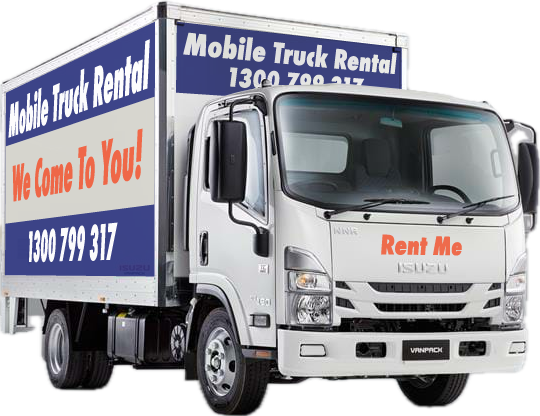
Unlike other furniture truck hire options in Australia, we bring the furniture truck directly to your driveway and collect it when you’re finished. No awkward queues, no rushing through traffic to return it before 5 PM. Our modern 3-tonne Pantech trucks are spacious, feature multiple internal tie-down rails for easy securing, and can be driven on a standard car licence.
Why Mobile Truck Rental is Different
Most truck hire companies operate the same way: you find a branch, drive there, fill out paperwork, load up, and then race against the clock to return the vehicle before they close.
We do it differently.
At Mobile Truck Rental, we eliminate the depot visit entirely. We bring the truck directly to your driveway and pick it up when you’re finished. No queues. No rushing through traffic. No late return fees!
While the big-name rental chains offer trucks, they don’t offer convenience. Our modern 3-tonne Pantech trucks are spacious, equipped with internal tie-down rails, and can be driven on a standard car licence – just like the competitors’ vehicles. The difference? We save you hours of running around so you can focus on what matters: getting your furniture home safely!
Ready to Move Your Furniture Without the Stress?
Stop wrestling with straps in a car park and leaving your car at the depot. Book a spacious, clean, and reliable truck that comes to you.
Get your furniture home safely. Book your Mobile Truck Rental today at www.mobiletruckrental.com.au!